

Florida remains one of the highest-risk states for canine heartworm disease in the nation, with the Florida Panhandle and Southwest Florida emerging as severe infection “hot spots” exceeding 100 cases per clinic. Because mosquitoes thrive year-round, local veterinarians universally mandate continuous monthly prevention and annual testing. Heartworm Risks in the Southeast: High Prevalence. According to the American Heartworm Society’s 2026 data, Florida consistently ranks in the top 10 states nationwide for the highest density of reported heartworm cases. Emerging Hot Spots: Infection density is surging in the Florida Panhandle and Southwest Florida, where clinics have diagnosed over 100 positive cases each.
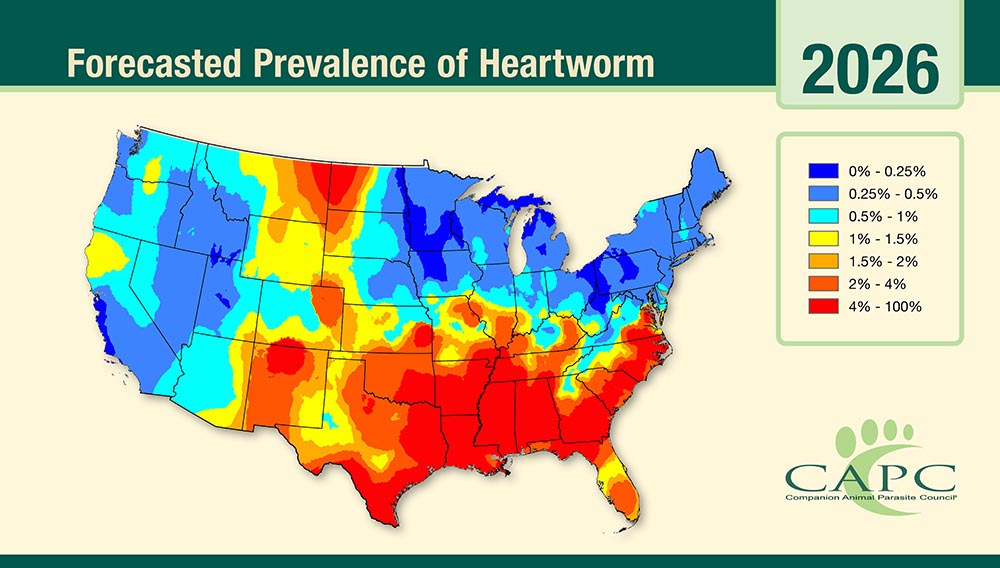
Year-Round Threat: Subtropical temperatures and persistent standing water allow mosquitoes to breed continuously. Vets warn against seasonal lapses in preventative medications. Prevention and Care Year-Round Chews: Oral or topical preventatives (like Heartgard, Sentinel, Simparica Trio or Revolution Plus) must be given consistently every 12 months. If you do not want to give something every month you can have your pet receive a ProHeart 12 injection that would be good for 12 months of Heartworm protection.
Annual Testing: Routine blood antigen testing is critical, as preventatives can cause severe reactions in dogs that already have an adult heartworm infection. Cost of Treatment: Treating active heartworm disease—which involves a series of injections—can range from ($1800.00 to well over ($3500.00) depending on the dog’s size and stage of infection.